

Jiuzhaigou County (Chinese Pinyin: Jiǔzhàigōu Xiàn) is administered by the Aba Tibetan and Qiang Autonomous Prefecture in northwestern Sichuan Province, approximately 450 kilometers from the provincial capital, Chengdu.
Covering an area of 5,290 square kilometers, Jiuzhaigou County comprises 2 towns, 15 townships, 120 administrative villages, and 10 neighborhood communities. The county seat is located in Yongle Town.
Archaeological surveys have revealed Neolithic sites in several towns within Jiuzhaigou County, tracing its history back over five thousand years. Originally known as Yangtong, the area was inhabited by the Diqiang people from the pre-Shang Dynasty (1765 BC – 1122 BC) through the Qin Dynasty (248 BC – 207 BC). Following the establishment of the Western Han Dynasty (202 BC – 9 AD), Dian Di Dao was established—the earliest verifiable administrative body in the region. In 566 AD, the Northern Zhou Dynasty (557–581 AD) established Fuzhou Manager Mansion in Huanglong Township. Later, in 587 AD, Emperor Wen of the Sui Dynasty (581–618 AD) relocated Fuzhou from Huanglong to Anle Township (now part of present-day Jiuzhaigou County). During the Qing Dynasty (1644–1911), Nanping Camp replaced Fuzhou, later becoming Nanping County, which was officially renamed Jiuzhaigou County in 1998.

Jiuzhaigou lies in the transitional zone between the Tibetan Plateau and the Sichuan Basin, featuring complex geological formations at altitudes ranging from 1,900 to 3,100 meters. The county's terrain is characterized by a network of vertical and horizontal valleys, with higher elevations in the northwest descending to lower plains in the southeast—a dramatic elevation drop of approximately 2,000 meters.
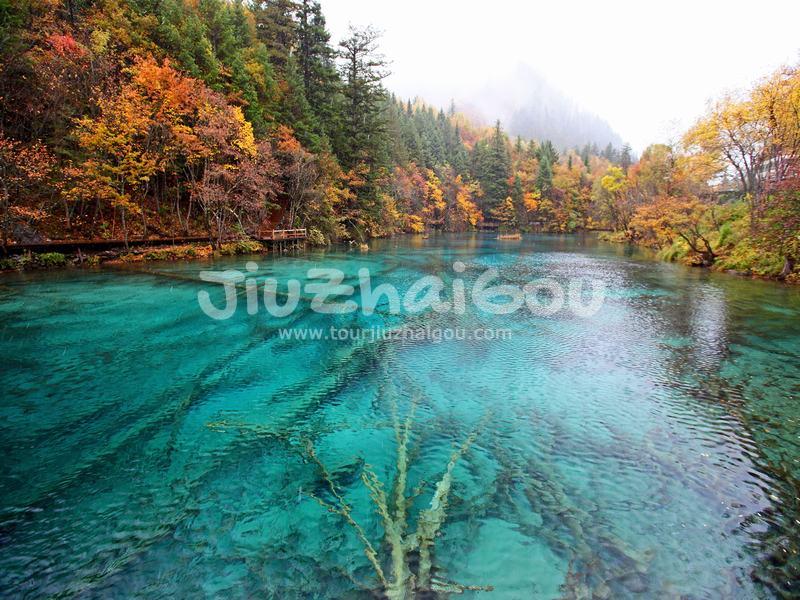
The region's distinctive landforms result from the interplay of Quaternary glaciers, tectonic plate movements, karst topography, water flow, and calcified beach streams. Countless valleys host numerous lakes, waterfall clusters, and calcified streams, creating Jiuzhaigou's renowned landscapes. Primeval forests cover more than half of the county's total area.

Jiuzhaigou County experiences a plateau humid climate, with high mountain peaks capped by snow year-round. The annual average temperature is 12.7°C, with mean annual rainfall of 550 mm.
Spring temperatures range from 9 to 18°C, characterized by significant daily fluctuations. Summer averages 19–22°C, with notably cooler evenings. Autumn offers pleasant weather but considerable diurnal temperature variation. Winters are cold, with temperatures frequently dropping below 0°C.

● Mineral Resources: Jiuzhaigou has proven deposits of gold, ferromanganese, hematite, arsenic, antimony, and 14 other mineral resources. It lies within one of China's six major gold metallogenic belts—the Golden Triangle region of northwestern Sichuan.
● Water Resources: The county features an extensive water system with abundant hydropower potential. Developable water resources total 642,000 KW, positioning Jiuzhaigou as an ideal location for hydropower construction.
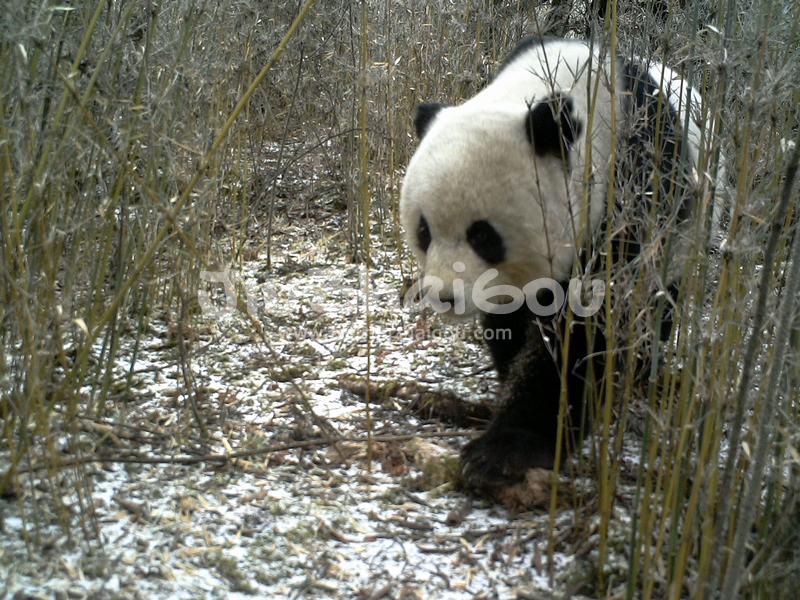
● Animals: The region hosts 619 species of terrestrial wildlife, including rare and protected species such as the giant panda, golden monkey, pheasant quail, Chinese monal (Lophophorus lhuysii), takin, musk deer, and snow leopard.
● Plants: Forest vegetation covers 69.75% of Jiuzhaigou County, making it the second largest forested area in Sichuan Province. Natural grasslands span 1,240 square kilometers. The area boasts 290 species of natural Chinese medicinal herbs, including Codonopsis, Angelica, Chinese caterpillar fungus (Ophiocordyceps sinensis), Fritillaria, Tianma (Gastrodia elata), and Polyporus. Additionally, 467 medicinal plant species, 2,033 wild plant species, and 33 rare plant varieties—such as Ginkgo biloba, yew, and Uniflora—are found here.
As January 8 of 2026, the county had a population of 66,949. The Han Chinese constitute the majority, followed by Tibetans as the second largest ethnic group. The region is also home to Yi, Tibetan, Qiang, Miao, Hui, Mongolian, Tujia, Lisu, Manchu, Yao, Dong, Naxi, Buyi, Bai, Zhuang, Dai, and other ethnic minorities.
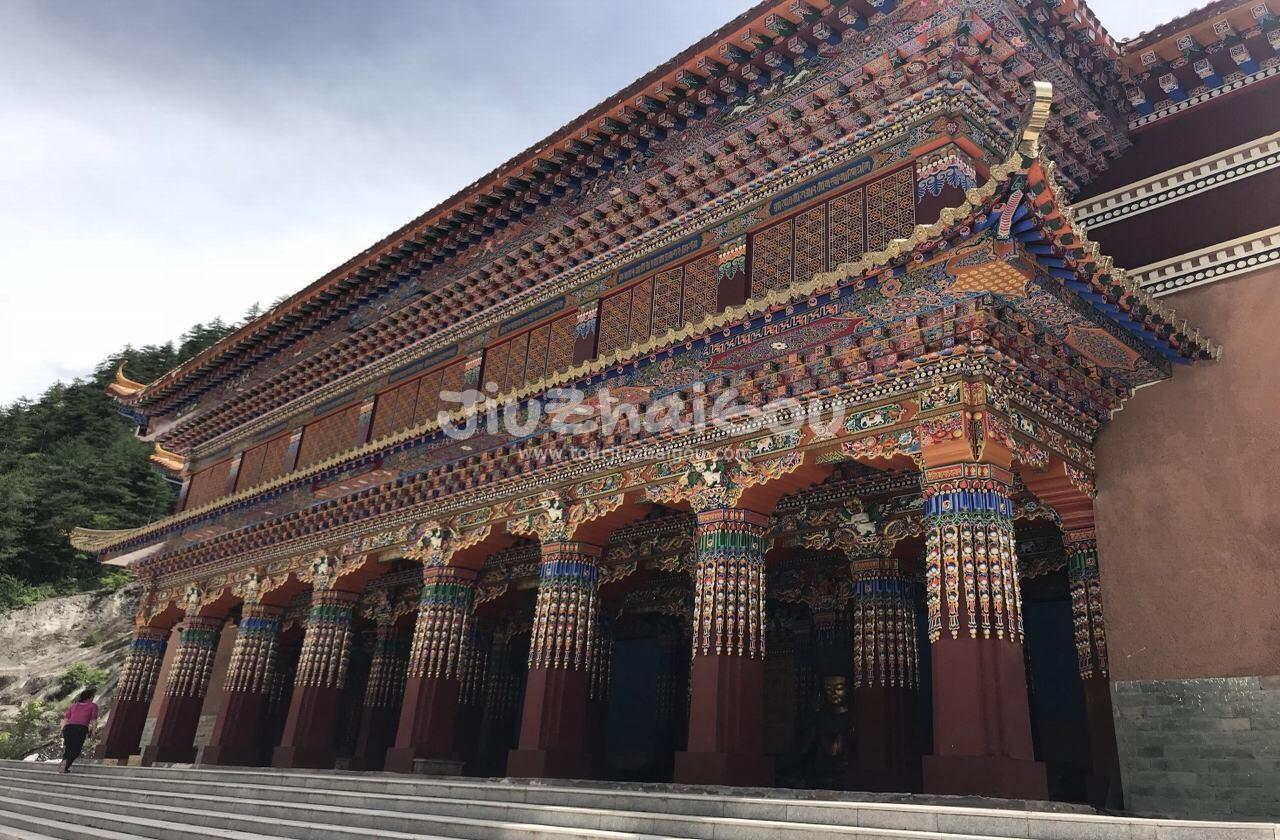
Jiuzhaigou County boasts exceptional landscapes and abundant tourism resources. The renowned Jiuzhaigou Valley Nature Reserve features four main scenic routes—Rize Valley, Zechawa Gully, Shuzheng Valley, and Zharu Valley—encompassing attractions such as Primeval Forest, Baojing Rock, Bonsai Beach, Reed Sea, Five Flower Lake, Long Lake, Five-Color Pond, Nuorilang Falls, and Sleeping Dragon Lake. In December 1992, Jiuzhaigou Valley was inscribed on the UNESCO World Natural Heritage List.